
Our Products
+
REGIONAL EXPERTISE
Premium GCC Oils & Fats Supplier
A trusted B2B partner across the Gulf – purity, scale and consistency in every batch.
Learn More →A trusted B2B partner across the Gulf – purity, scale and consistency in every batch.
Learn More →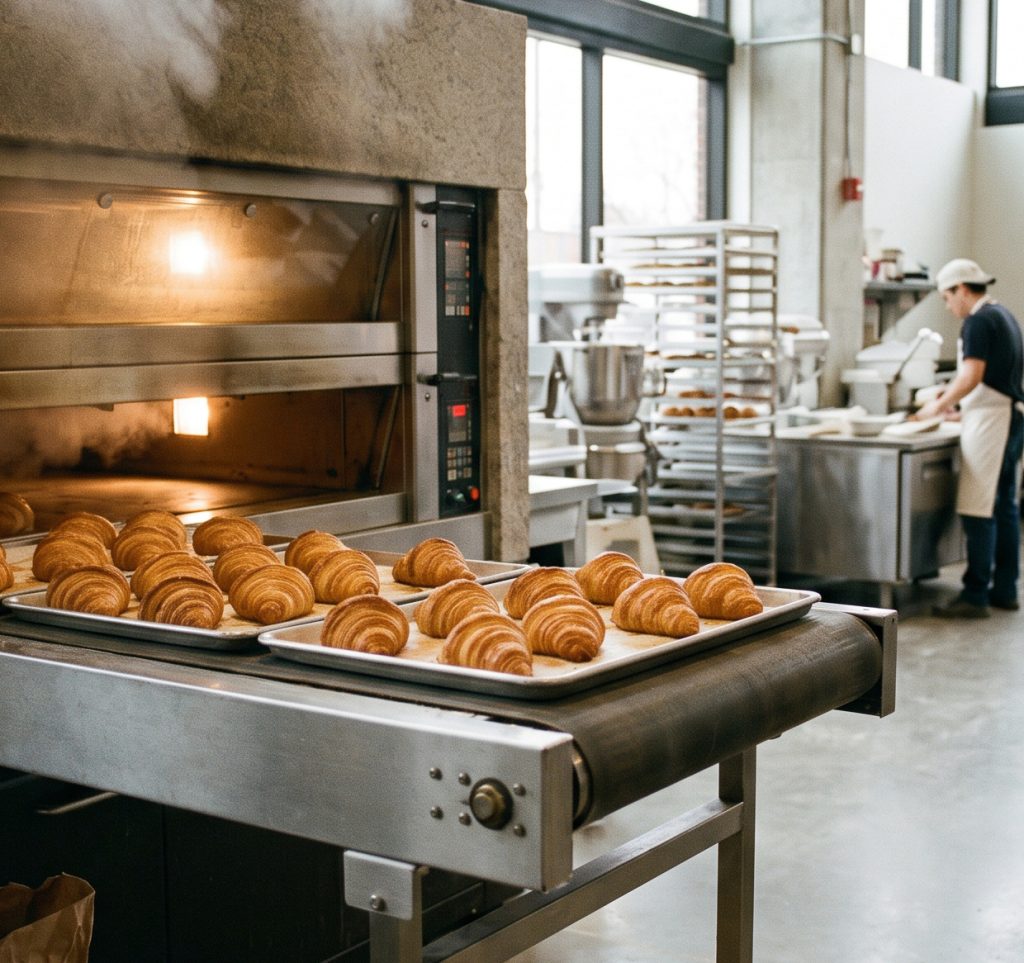
A croissant or puff pastry may look simple from the outside, but its structure depends on a tightly controlled relationship between dough, fat, temperature and mechanical handling. When that relationship is right, thin layers remain distinct, steam can lift the dough effectively and the finished product develops the volume, flake and texture consumers expect. When it is wrong, the result can be compressed layers, fat leakage, uneven lift or dough tearing.
For industrial bakeries and artisanal pastry operations in KSA and across the Gulf, selecting the right lamination fat is therefore a technical decision. It is not enough for a fat to taste good or have the right declared fat content. It must behave correctly during mixing, resting, sheeting, folding, proofing and baking.
The ideal fat depends on the process. Understanding the most important functional properties can help bakery teams choose a solution that delivers repeatable results across batches and production environments.
What the Fat Actually Does in Laminated Dough
Lamination works by creating alternating layers of dough and fat. During baking, water in the dough turns to steam. The fat helps keep the dough sheets separated long enough for that steam to expand the structure. The result is the characteristic lift and defined layering associated with croissants, Danish pastry and puff pastry.
If the fat becomes too soft during lamination, it can smear into the dough instead of remaining as a distinct layer. If it is too hard, it may crack or break into pieces during sheeting. Both conditions reduce layer definition and can make processing less consistent.
This is why bakery fats for laminated dough are designed around more than flavour. Plasticity, firmness, melting behaviour and temperature response all influence how efficiently the dough moves through the process.
1. Plasticity: The Foundation of Good Lamination
Plasticity describes a fat’s ability to deform under pressure without breaking or becoming oily. In practical bakery terms, the fat needs to move with the dough during sheeting and folding.
A lamination fat with an appropriate plasticity range can support smooth sheeting, reduce cracking and help maintain even distribution between dough layers. This becomes especially important on industrial lines, where the dough may pass through several rollers at controlled speeds and thicknesses.
In artisanal bakeries, plasticity is equally relevant, although the baker may compensate manually for small changes in temperature or dough condition. In large-scale production, there is less room for manual correction, so repeatable fat behaviour becomes more valuable.
2. Match Fat Firmness to Dough Firmness
Good lamination requires the dough and fat to have compatible firmness. If the dough is soft and the fat is very firm, the fat may fracture. If the fat is much softer than the dough, it may squeeze out during sheeting.
The goal is not a universal hardness value; it is balance under the actual processing conditions. Dough hydration, flour strength, resting time, room temperature and line speed all affect the required fat behaviour.
For this reason, bakeries should evaluate lamination fats on their own process rather than relying only on technical data sheets. A controlled production trial can reveal whether the fat remains workable through the full sequence of folds and reductions.
3. Melting Profile Matters from the Line to the Oven
A lamination fat needs enough structure to remain in place during dough handling, but it must also melt appropriately during baking. If it melts too early, layers may collapse or fat may leak before the pastry structure has developed. If it remains too firm for too long, the finished eating quality can feel waxy or heavy.
A well-matched melting profile supports both process stability and sensory quality. This is particularly important for products that must deliver a light, flaky texture while still surviving production, proofing and baking conditions.
Savola Professional’s bakery portfolio includes fats and margarines positioned for puff pastry and croissant applications, with emphasis on plasticity, lamination performance, dough resistance and controlled melting.
4. Dough Handling and Resistance to Tearing
Production losses often begin before the oven. Dough that tears during sheeting can create weak spots, uneven layers and additional rework. Fat selection can influence how well the dough-fat system tolerates mechanical stress.
In industrial production, the most suitable fat should support consistent machinability across long runs. That means reliable behaviour as the dough is reduced in thickness, folded and transferred between line stages. For artisanal pastry kitchens, the same principle applies on a smaller scale: the fat should remain workable enough to support clean folds and defined layers without excessive sticking or breakage.
When teams are experiencing recurring lamination problems, it is useful to review fat condition alongside dough temperature, resting time, sheeter settings and flour performance rather than treating the fat as an isolated variable.
5. Croissants and Puff Pastry Do Not Always Need the Same Solution
Although both products are laminated, their processes are not identical. Croissant dough is yeasted and typically undergoes proofing, so the fat must remain compatible with a process that includes fermentation and controlled expansion. Puff pastry relies primarily on steam for lift and often involves a higher number of layers and a different dough-to-fat balance.
The intended finished texture also differs. Croissants require a combination of layered structure, tenderness and an open internal crumb. Puff pastry is usually judged more heavily on dramatic lift, separation and crisp flake.
This does not mean a single fat can never perform across both applications. It means the bakery should test performance against the exact product specification rather than choosing solely by category name.
6. Consider the Gulf Production Environment
Temperature management is central to laminated dough, and that is especially relevant in warm regional environments. The key issue is not simply outdoor climate, because well-managed bakeries operate with controlled production spaces. However, temperature changes during ingredient storage, dough preparation, transfer and processing can still affect the working consistency of both dough and fat.
A robust process therefore combines an appropriate lamination fat with disciplined temperature control. Bakeries should define target temperatures for the fat and dough, monitor production-room conditions and minimize unnecessary delays between lamination stages.
For businesses operating several sites across KSA or the wider Gulf, standardizing these controls can help reduce variation between bakeries.
7. Industrial and Artisanal Bakeries Have Different Priorities
Industrial bakeries often prioritize line efficiency, resistance to mechanical stress, uniformity across high volumes and compatibility with automated sheeting. Artisanal bakeries may place greater emphasis on ease of handling, flexibility during manual production and the sensory characteristics of the finished pastry.
Savola Professional supplies bakery fats for both industrial and artisanal applications. The important point is to choose a fat designed for the intended production environment rather than treating “bakery margarine” as a single interchangeable category.
A puff pastry fat supplier in KSA should be able to discuss not only the product specification but also the line conditions, dough system and output targets that influence performance.
A Better Way to Trial Lamination Fats
When comparing fats, change one variable at a time. Keep the flour, recipe, dough temperature, fold sequence, proofing conditions and oven profile as consistent as possible. Then compare practical indicators such as:
The best-performing option is the one that works across the full process, not simply the one that looks easiest during the first fold.
Build Consistency from Dough to Finished Pastry
The right fat helps create a stable production window. It supports the baker or production line during lamination, protects layer definition and contributes to the texture and lift of the finished product. For high-volume bakeries, those benefits also translate into reduced variability and more predictable output.
Savola Professional provides specialty bakery fats and margarines for croissants, puff pastry and other laminated products across KSA and MENA, with solutions for both industrial and artisanal production. The most effective selection starts with the application: product type, line conditions, temperature profile and desired finished texture.
If your bakery is dealing with torn layers, uneven lift, fat leakage or inconsistent flake, speak with Savola Professional’s technical team to assess the process and identify a lamination fat suited to your production requirements.

Your quote request has been submitted successfully.
Our team will review your details and get back to you!