
Our Products
+
REGIONAL EXPERTISE
Premium GCC Oils & Fats Supplier
A trusted B2B partner across the Gulf – purity, scale and consistency in every batch.
Learn More →A trusted B2B partner across the Gulf – purity, scale and consistency in every batch.
Learn More →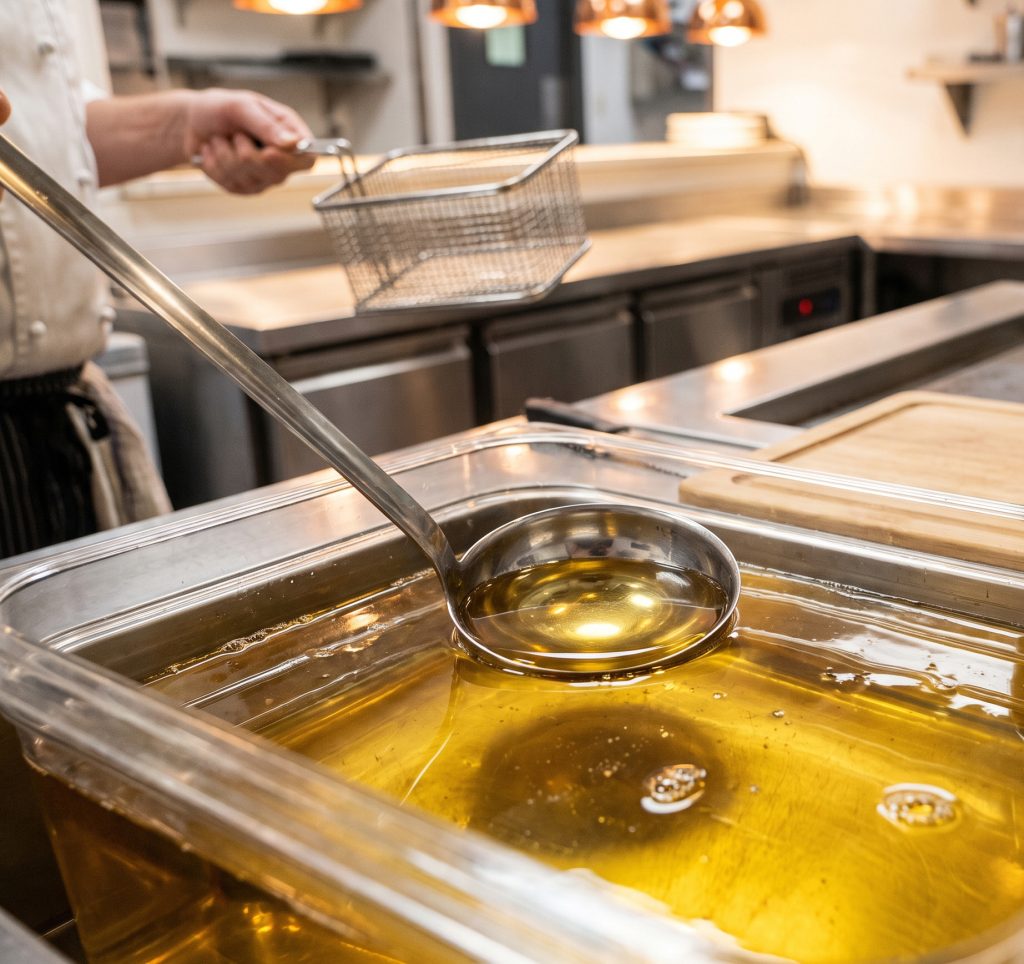
In a professional kitchen, frying oil is not simply a commodity purchased by the litre. It is a working ingredient that directly affects food quality, fryer performance, kitchen efficiency and the consistency of every plate leaving the pass. For hotels, restaurants and catering businesses operating at high volume, choosing the right frying oil can influence everything from crispness and colour to oil change frequency and operating cost.
That makes oil selection especially important for HORECA operators in Saudi Arabia and across the Gulf. Kitchens may need to perform through long service windows, sudden peaks in demand, banqueting schedules and multi-outlet operations, while maintaining the same product standard from the first batch to the last. A frying oil that performs well in light use may not deliver the same results under continuous commercial frying.
For procurement teams and chefs, the question is therefore not simply which oil is cheapest. The better question is: which oil delivers the right balance of heat stability, product quality, operational reliability and cost-in-use for the specific kitchen?
Frying exposes oil to heat, oxygen, moisture and food particles. Over time, these conditions can change the oil’s colour, flavour, viscosity and frying behaviour. The rate at which that happens depends on the oil itself, the fryer setup, the food being cooked and the way the kitchen manages the frying process.
Poor oil performance can lead to inconsistent browning, unwanted flavours, excessive foaming, smoke, faster oil replacement and greater variation between batches. In a busy restaurant or hotel kitchen, these are not only culinary issues. They can become operational issues that affect throughput, staff workload and food cost.
A high-performing frying oil should therefore support the kitchen under the conditions in which it is actually used. For a casual restaurant, that may mean several concentrated service periods per day. For a hotel or catering operation, it may mean multiple menus, large functions and different fried products sharing the same production infrastructure.
One of the first factors to assess is how well the oil tolerates repeated exposure to high temperatures. Oxidative stability refers to the oil’s resistance to reactions with oxygen that can accelerate degradation. Thermal stability relates to how the oil behaves under sustained heat.
For high-volume HORECA frying, stability matters because an oil that deteriorates quickly may require more frequent replacement and may become less predictable during service. Stable frying performance helps operators maintain a more consistent product while managing oil usage more effectively.
When evaluating options, procurement teams should look beyond a generic label such as “vegetable oil” and ask how the product is designed to perform in professional frying conditions. Savola Professional’s foodservice portfolio, for example, includes high-stability frying oils and fats intended for intensive commercial use, including products positioned around oxidative stability, high smoke point, colour stability and resistance to foaming.
The lowest unit price does not always translate into the lowest operating cost. Oil that needs to be discarded earlier may increase consumption, labour and downtime. A more useful comparison is cost-in-use: how much productive frying performance the kitchen receives from the oil under controlled operating conditions.
This does not mean that every kitchen should automatically choose the longest-life oil available. The right choice depends on the menu, throughput and fryer management practices. A restaurant frying delicate products may have different priorities from a large catering kitchen producing fried chicken, potatoes or breaded items for extended periods.
A proper trial should compare oil life, food quality and replacement frequency under equivalent conditions. The result gives purchasing teams a far more realistic view of value than the container price alone.
Frying oil is part of the sensory experience of the finished food. It contributes to heat transfer and crust development, but it should not overwhelm the intended flavour of the product. For many HORECA applications, a clean or neutral flavour profile is valuable because it allows the food, seasoning and recipe to remain the focus.
Colour stability also matters. As oil degrades, fried products can become darker even when cooking time and temperature remain unchanged. This is particularly problematic for restaurant groups and hotel kitchens where visual consistency is part of the brand standard.
The goal is repeatability: similar crispness, colour and eating quality across shifts and service periods. The oil should support the recipe rather than introduce another source of variation.
There is no single “best frying oil” for every operation. Menu mix should guide the choice. A kitchen that primarily fries potatoes has a different load profile from one handling breaded proteins, dough products or heavily seasoned foods. Moisture, crumbs, batter and seasoning all interact with the frying medium.
Operators should also consider whether the oil will be used only for deep frying or across broader cooking applications. Some kitchens benefit from a dedicated high-performance frying oil, while others may require a portfolio that includes frying oils, cooking oils, olive oils, butter blends or vegetable ghee for different stations.
Working with an oils and fats supplier that understands foodservice applications can make selection easier because the conversation begins with the process and menu rather than with a one-size-fits-all product.
Foaming and smoke are practical signs that can disrupt service and make fryer management more difficult. Excessive foam may reduce usable fryer capacity and make the surface harder to manage, while smoking can create an unpleasant kitchen environment and indicate that the operating conditions are not suitable for the oil.
Food particles and carbonised residue can also accelerate oil deterioration. This is why oil choice should be paired with disciplined fryer practices: correct temperatures, regular filtration, removal of crumbs, avoiding unnecessary heat during idle periods and preventing cross-contamination with water or cleaning chemicals.
A high-quality oil cannot compensate for poor fryer management, but the right oil and the right process reinforce each other.
For hotel groups, catering businesses and restaurant chains, procurement is rarely about one fryer in one kitchen. Consistency across locations becomes a key requirement. Buyers need confidence that the product specification, supply and performance will remain dependable as volumes change.
This is where supplier capability matters. A frying oil supplier for HORECA in KSA should be able to support professional volumes, provide clear product specifications and understand the operational demands of regional foodservice. Reliable supply is particularly important when the same frying standard must be maintained across multiple sites or during high-demand periods.
Oil performance is affected by the fryer, temperature, food load, filtration routine and service pattern. For that reason, the strongest supplier relationship is consultative. Technical teams can help evaluate an existing frying setup, identify the likely source of inconsistent results and recommend a product or operating adjustment that better matches the application.
Savola Professional positions its foodservice offering around application-driven support for HORECA and QSR operators across KSA and MENA. Its wider frying solutions include heavy-duty frying oils, long-life blends and industrial frying fats, supported by food technologists and technical advisory capabilities.
Before choosing or changing a frying oil, ask the following questions:
These questions turn oil purchasing into an operational decision rather than a price comparison.
The right frying oil should make the kitchen easier to run. It should support consistent food quality, tolerate the realities of professional service and help the operator manage oil use predictably. In KSA and the Gulf, where hospitality and foodservice businesses frequently operate at scale, those factors can be as important as the initial purchase price.
Savola Professional supplies frying oils and foodservice fats for hotels, restaurants, catering operations and QSR environments across KSA and MENA. By matching the frying medium to the menu, service pattern and operational priorities, businesses can make a more informed decision – one based on performance, consistency and total value.
For operators reviewing their current frying setup, the best starting point is a practical assessment of the application. Speak with Savola Professional’s technical team to identify the frying solution that best fits your kitchen and service requirements.

Your quote request has been submitted successfully.
Our team will review your details and get back to you!